Elevate Your Space: Infusing Spiritual Serenity with Mandala Designs
In today's fast-paced world, creating a sanctuary within your home has become more important than ever. The spaces we inhabit directly influence our mental well-being, emotional stability, and spiritual growth. One of the most transformative ways to elevate your living environment is through the incorporation of mandala designs. These ancient, sacred geometric patterns have transcended centuries and cultures, offering modern homeowners a powerful tool for creating spaces that radiate peace, harmony, and spiritual serenity. At GageHolloway, we believe that your home should be a reflection of your inner self, a place where tranquility meets beauty, and where every element serves a purpose in your journey toward holistic wellness.
Understanding Mandalas: Ancient Wisdom Meets Modern Living
Mandalas have captivated human consciousness for thousands of years. The word mandala comes from Sanskrit, meaning circle or completion, and these intricate patterns represent the universe in Hindu and Buddhist traditions. Far more than mere decorative elements, mandalas are spiritual tools designed to guide meditation, facilitate healing, and promote balance in one's life. Each mandala tells a story through its geometric precision, symmetrical patterns, and carefully chosen colors, making them powerful instruments for transformation.
The Historical Significance of Mandalas
The origins of mandalas trace back to ancient India, where they were used in religious ceremonies and spiritual practices. Buddhist monks created elaborate sand mandalas as part of their meditation and healing rituals, spending weeks or even months creating intricate designs only to ceremonially destroy them, symbolizing the impermanence of life. Hindu temples feature mandala designs in their architecture and artwork, representing the cosmos and the divine order of the universe. These traditions recognized something profound about mandalas: their ability to quiet the mind, focus intention, and connect us to something greater than ourselves.
As these sacred patterns spread across cultures and continents, they evolved while maintaining their core spiritual essence. Today, mandalas have become accessible to everyone, regardless of religious background or spiritual practice. They serve as bridges between ancient wisdom and contemporary living, offering modern individuals a tangible way to incorporate spiritual principles into their daily lives.
The Psychology Behind Mandala Design
Modern psychology has begun to validate what ancient traditions have always known: mandalas have a profound effect on the human mind. The symmetrical, repetitive patterns of mandalas naturally draw our attention inward, creating a meditative state even for those who don't practice formal meditation. When we gaze upon a mandala, our brains respond by entering a more relaxed state, reducing stress hormones and promoting a sense of calm.
The circular nature of mandalas is particularly significant. Circles are found throughout nature and the universe, from atoms to planets to galaxies. Our brains recognize this fundamental pattern and respond with a sense of completion and wholeness. This is why mandala designs are so effective at creating a sense of balance and harmony in any space. They remind us, on a subconscious level, that we are part of a larger, interconnected whole.
The Transformative Power of Mandala Designs in Your Home
Your home is more than just a physical structure; it is an extension of your consciousness. The colors, textures, patterns, and objects you surround yourself with constantly communicate messages to your subconscious mind. By intentionally incorporating mandala designs into your living space, you create an environment that actively supports your spiritual growth and emotional well-being.
Creating Sacred Spaces with Intention
When you bring mandala designs into your home, you are making a conscious choice to prioritize peace and spiritual connection. This intentional act is the first step in transforming your space into a sanctuary. Whether you choose to dedicate an entire room to meditation and spiritual practice or simply incorporate mandala elements throughout your home, the effect is cumulative. Each mandala design serves as a visual anchor, reminding you of your commitment to inner peace and spiritual development.
The placement of mandalas in your home matters significantly. In feng shui, the ancient Chinese practice of spatial arrangement, the center of your home is considered the heart of the space, representing health and well-being. Placing a mandala design in this central location can amplify its effects throughout your entire home. Similarly, placing mandalas in your bedroom promotes restful sleep and peaceful dreams, while mandalas in your meditation space or home office enhance focus and spiritual clarity.
The Color Psychology of Mandala Designs
Mandalas come in countless color variations, and each color carries its own vibrational frequency and spiritual significance. Understanding color psychology allows you to choose mandala designs that specifically support your intentions and needs.
Red mandalas are associated with energy, passion, and grounding. They stimulate the root chakra and are excellent for spaces where you need to feel more connected to the earth and present in your body. If you struggle with anxiety or feel disconnected from reality, red mandala designs can help anchor you.
Orange mandalas represent creativity, joy, and social connection. They stimulate the sacral chakra and are perfect for creative spaces, living rooms, or anywhere you want to encourage warmth and social harmony. Orange mandalas bring a sense of playfulness and enthusiasm to your environment.
Yellow mandalas embody intellect, clarity, and personal power. Associated with the solar plexus chakra, yellow mandalas are ideal for home offices, study areas, or spaces where you engage in intellectual work. They promote mental clarity, confidence, and the ability to manifest your intentions.
Green mandalas represent healing, growth, and renewal. Connected to the heart chakra, green mandalas are perfect for bedrooms, living rooms, or any space where you want to cultivate compassion and emotional balance. Green is the color of nature and promotes a sense of calm and restoration.
Blue mandalas are associated with communication, truth, and spiritual awareness. They activate the throat chakra and are excellent for spaces where you want to enhance communication or deepen your spiritual practice. Blue mandalas create a sense of peace and clarity.
Purple and indigo mandalas represent spiritual insight, intuition, and higher consciousness. Connected to the third eye and crown chakras, these mandalas are perfect for meditation spaces, bedrooms, or anywhere you want to enhance your spiritual connection and intuitive abilities.
Incorporating Mandalas into Different Rooms of Your Home
Each room in your home serves a different purpose and requires a different energy. By thoughtfully selecting and placing mandala designs, you can optimize each space for its intended use while maintaining a cohesive spiritual atmosphere throughout your home.
The Bedroom: A Sanctuary for Rest and Renewal
Your bedroom is your personal sanctuary, a place where you spend a significant portion of your time in a vulnerable state. Creating a bedroom environment that promotes deep rest and peaceful dreams is essential for your overall health and well-being. Mandala designs in soft, calming colors like lavender, pale blue, or soft green can transform your bedroom into a haven of tranquility.
Consider placing a mandala design above your bed as a focal point. This creates a visual anchor that your eyes naturally settle on as you drift off to sleep and as you wake in the morning. The symmetrical patterns of the mandala will help quiet your mind and prepare it for rest. You might also incorporate mandala designs through bedding, wall art, or even a mandala-patterned rug beside your bed.
For those who struggle with insomnia or restless sleep, mandalas can be particularly beneficial. The meditative quality of mandala patterns helps transition your mind from the busy activity of the day into a more relaxed state conducive to sleep. Some people find that spending a few minutes gazing at a mandala design before bed significantly improves their sleep quality.
The Living Room: Cultivating Harmony and Connection
Your living room is where you gather with family and friends, where you relax and spend leisure time. This space benefits from mandala designs that promote harmony, warmth, and connection. Consider incorporating mandalas through wall art, throw pillows, area rugs, or decorative objects.
A large mandala artwork as a focal point on one wall can create a stunning visual anchor for the entire room. This draws the eye and creates a sense of balance and order. Alternatively, you might incorporate smaller mandala designs throughout the room, creating a cohesive aesthetic that feels intentional and harmonious.
The living room is also an excellent place to incorporate mandalas in warm, inviting colors like orange, gold, or warm red. These colors promote social connection and create an atmosphere of warmth and welcome. When guests enter a living room adorned with mandala designs, they often feel an immediate sense of calm and comfort, even if they don't consciously understand why.
The Home Office: Enhancing Focus and Productivity
If you work from home, your office space significantly impacts your productivity, creativity, and professional success. Mandala designs can enhance focus and mental clarity while maintaining a professional aesthetic. Choose mandalas in colors like blue, yellow, or green, which promote mental clarity, confidence, and balanced thinking.
A mandala design positioned where you can see it during breaks helps reset your mind and prevent mental fatigue. Some people find that gazing at a mandala for a few minutes during a work break significantly improves their ability to focus when they return to their tasks. The meditative quality of mandalas provides a mental reset that is far more restorative than scrolling through social media or other digital distractions.
You might incorporate mandalas through framed wall art, a mandala-patterned desk pad, or even a mandala design on your computer wallpaper. The key is to choose designs that feel professional while still supporting your spiritual and mental well-being.
The Meditation Space: Creating a Dedicated Spiritual Sanctuary
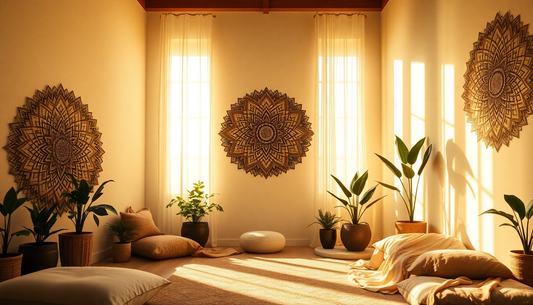
If you have the space to create a dedicated meditation room or corner, mandalas become even more powerful. This space can be your personal sanctuary, a place where you retreat for spiritual practice, meditation, and inner work. Fill this space with mandala designs that resonate with your spiritual path and intentions.
Consider creating a mandala altar or focal point in your meditation space. This might be a framed mandala artwork, a mandala tapestry, or even a mandala created from natural materials like stones or flowers. Some people create their own mandalas as part of their spiritual practice, using this creative process as a form of moving meditation.
The meditation space is where you can fully embrace the spiritual dimensions of mandalas without concern for aesthetic compatibility with other design elements. You might incorporate multiple mandalas, create an entire mandala-themed environment, and use this space as a dedicated sanctuary for your inner work.
The Bathroom: Transforming Daily Rituals into Spiritual Practices
Your bathroom is a space of transition and renewal, where you engage in daily rituals of cleansing and self-care. Incorporating mandala designs into your bathroom transforms these daily routines into spiritual practices. A mandala design on the bathroom wall, on shower curtains, or even on bath mats creates a spa-like atmosphere that elevates your self-care rituals.
Consider placing a mandala design where you can see it while bathing or showering. This transforms your daily hygiene routine into a meditative practice. As you cleanse your body, you can also visualize cleansing your energy and spirit, using the mandala as a focal point for this intention.
Mandala Design Styles and Aesthetic Approaches
Mandalas come in countless styles and aesthetic approaches, allowing you to find designs that resonate with your personal taste while serving your spiritual intentions. Understanding different mandala styles helps you select designs that feel authentic to your home and your spiritual path.
Traditional Mandala Designs
Traditional mandalas draw inspiration from Hindu, Buddhist, and other ancient spiritual traditions. These designs often feature intricate geometric patterns, sacred symbols, and rich colors. Traditional mandalas are perfect if you want to honor the spiritual heritage of these designs and create a space that feels deeply connected to ancient wisdom.
Traditional mandalas often incorporate specific spiritual symbols and meanings. For example, a mandala might feature a lotus flower at its center, representing spiritual awakening and enlightenment. The number of petals, the specific geometric patterns, and the colors all carry spiritual significance. When you choose a traditional mandala, you are often choosing a design with centuries of spiritual meaning embedded within it.
Contemporary Mandala Designs
Contemporary mandalas take the core principles of traditional designs and reinterpret them for modern aesthetics. These designs might feature cleaner lines, more minimalist approaches, or unexpected color combinations. Contemporary mandalas are perfect if you want to incorporate mandala energy into a modern home without creating a space that feels overly exotic or culturally specific.
Contemporary mandalas often blend mandala principles with other design aesthetics, creating hybrid designs that feel fresh and current. You might find mandalas with watercolor effects, mandalas combined with botanical elements, or mandalas that incorporate modern geometric shapes alongside traditional patterns.
Bohemian Mandala Designs
Bohemian mandalas embrace the free-spirited, eclectic aesthetic of bohemian design while maintaining the spiritual essence of mandalas. These designs often feature rich colors, mixed patterns, and a sense of artistic spontaneity. Bohemian mandalas are perfect for creating spaces that feel creative, artistic, and spiritually connected.
Bohemian mandalas often incorporate natural elements like flowers, leaves, and animals alongside geometric patterns. They celebrate individuality and artistic expression while maintaining the meditative quality of mandala designs. If you have a bohemian aesthetic in your home, bohemian mandalas integrate seamlessly while adding spiritual depth.
Minimalist Mandala Designs
Minimalist mandalas strip away excess detail, focusing on the essential geometric patterns and clean lines. These designs are perfect for modern, minimalist homes where you want to incorporate mandala energy without overwhelming the space. Minimalist mandalas often feature single colors or limited color palettes, creating a sophisticated, understated aesthetic.
Minimalist mandalas prove that you don't need elaborate detail to create powerful spiritual impact. The simplicity of these designs actually enhances their meditative quality, allowing your mind to focus on the essential patterns and geometric relationships. Minimalist mandalas are perfect for spaces where you want spiritual energy without visual complexity.
Mandala Products and Home Decor Options
At GageHolloway, we offer a diverse range of mandala products designed to help you infuse your space with spiritual serenity. Understanding the different product options available allows you to create a cohesive mandala aesthetic throughout your home.
Wall Art and Tapestries
Mandala wall art serves as a powerful focal point in any room. Large-scale mandala artwork creates an immediate visual impact and sets the tone for the entire space. Mandala tapestries offer a softer, more flexible option that can be hung on walls, draped over furniture, or even used as room dividers. Tapestries create a more bohemian aesthetic while still providing the spiritual benefits of mandala designs.
When selecting wall art or tapestries, consider the size of your space and the visual weight of the design. A large, intricate mandala works well in spacious rooms with high ceilings, while smaller, simpler mandalas are better suited to intimate spaces or rooms with limited wall space. The placement of mandala wall art should create a sense of balance in the room, typically positioned at eye level or slightly above.
Bedding and Textiles
Mandala-patterned bedding transforms your bedroom into a sanctuary while providing the practical function of comfortable, beautiful textiles. Mandala duvet covers, pillowcases, and sheets allow you to surround yourself with mandala energy as you sleep. The repetitive patterns of mandalas on bedding create a soothing visual environment that promotes restful sleep.
Beyond bedding, mandala-patterned throw pillows, blankets, and cushions add comfort and spiritual energy to any room. These textile elements are particularly effective because they invite tactile interaction. As you touch and hold mandala-patterned textiles, you engage multiple senses in the meditative experience.
Rugs and Floor Coverings
Mandala rugs ground your space both literally and energetically. A mandala rug in your meditation space, bedroom, or living room creates a defined sacred area while adding warmth and comfort underfoot. Mandala rugs come in various sizes, colors, and styles, allowing you to find options that complement your existing decor.
The placement of a mandala rug is significant. In feng shui, the center of a room is considered the heart of the space. Placing a mandala rug in the center of a room amplifies its effects. Alternatively, placing a mandala rug in a specific area of your home that corresponds to your intentions (such as a rug in the relationship corner of your bedroom) can enhance the manifestation of those intentions.
Decorative Objects and Sculptures
Mandala-inspired decorative objects bring three-dimensional spiritual energy into your space. Mandala sculptures, carved wooden mandalas, crystal mandalas, and metal mandala wall hangings add visual interest and tactile elements to your decor. These objects often become conversation pieces, allowing you to share your spiritual interests with guests.
Decorative mandala objects are particularly effective when placed on shelves, tables, or altars where they can be seen and appreciated. Some people like to hold or touch mandala sculptures during meditation or moments of stress, using the tactile experience as an anchor for their spiritual practice.
Lighting and Lamps
Mandala-patterned lighting fixtures create a magical atmosphere while infusing your space with mandala energy. Mandala lamps, lanterns, and light fixtures cast beautiful patterns of light and shadow, creating a dynamic, ever-changing mandala experience. The interplay of light and shadow through mandala patterns creates a sense of movement and life within the design.
Mandala lighting is particularly effective in creating ambiance and setting the mood in a space. The warm glow